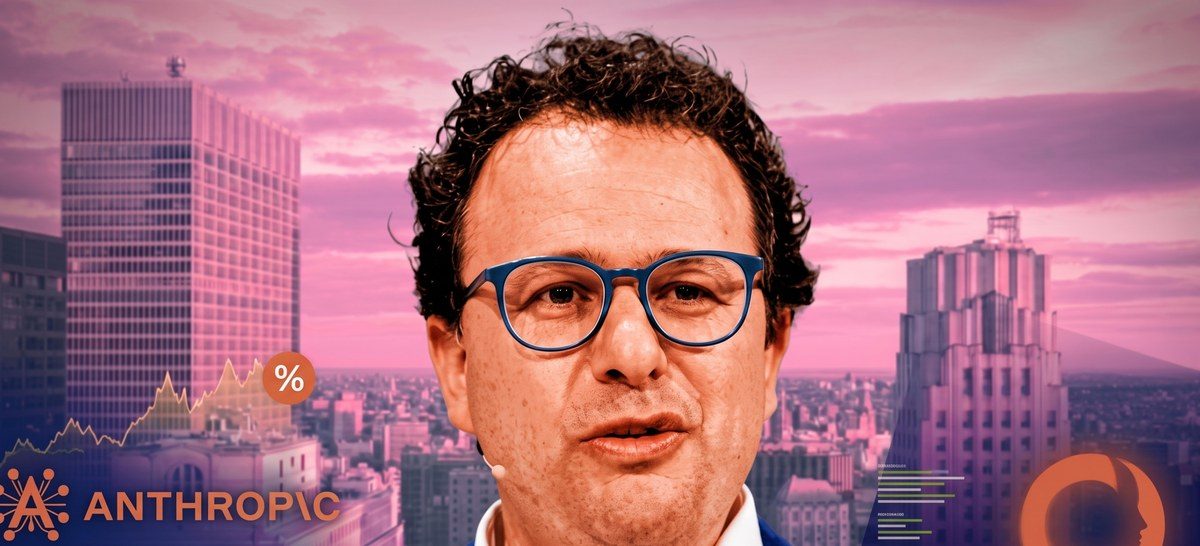
Anthropic — the AI lab behind Claude — has taken the first formal step toward what could become the largest public offering in history, and investors are circling a valuation that would place it among the most valuable companies on earth.
The company confidentially filed a draft S-1 with the SEC on June 1, 2026. Press reports point to an October window on the Nasdaq, with Goldman Sachs, JPMorgan and Morgan Stanley leading an offering expected to raise upward of $60 billion.
Investors are reportedly targeting a valuation near $2 trillion. Anthropic itself has not confirmed a target, a timeline, or a price.
The numbers behind the ambition
The valuation talk is aggressive, but the growth underneath it is real and documented.
Bloomberg reported on August 17 that Anthropic's annualized revenue run rate surpassed $65 billion at the end of July 2026. That is up from roughly $47 billion in mid-May — an increase of nearly 40% in about ten weeks.
The company's last private mark was a $965 billion valuation in its May 2026 Series H. If the rumored $2 trillion figure holds at listing, public investors would be paying roughly double the price private investors paid only months earlier.
That gap is the central question of this offering. A $2 trillion valuation on a $65 billion run rate is about 31 times revenue — rich by any historical standard, and a bet that the growth curve does not bend.
What "confidential" actually means
A confidential filing is not secrecy for its own sake; it is a routine provision that lets a company work through SEC comments without competitors reading its financials.
The practical consequence for investors: the S-1 is not on EDGAR yet. Revenue breakdowns, customer concentration, compute costs, margins and executive compensation all remain shielded for now.
That changes on a clock. Under the JOBS Act, a company must publicly file its S-1 at least 15 days before beginning its roadshow. So the real disclosure event — the one that will let anyone actually underwrite this valuation — arrives roughly two weeks before the offering prices.
Why insider watchers should care
Right now Anthropic is invisible to insider analysis. Private companies file no Form 4s, so there is no record of who is buying, selling, or holding. An IPO changes that permanently, and it creates a predictable sequence worth tracking:
- The public S-1 reveals pre-IPO ownership — how much founders, employees and early backers hold, and who is selling into the offering itself.
- Form 4s begin the moment the company is public. Every officer, director and 10% owner must report trades within two business days.
- The lockup expires, typically around 180 days after listing. That is the first moment most insiders can sell freely, and it is historically one of the most informative windows in a newly public stock — the point where you learn whether the people who built the company want to own it at the market's price.
For a company that may debut near a trillion-dollar-plus valuation, that first wave of insider filings will be among the most closely read documents in the market.
The honest caveats
Several things being repeated about this deal are not confirmed. The $2 trillion valuation is investor speculation, not company guidance. The October date is a press expectation, not a scheduled event. Confidential filings frequently slip, and some never become offerings at all — market conditions in the autumn will have as much say as anything in the S-1.
What is solid: the filing happened, the run rate is real and growing fast, and the last private round valued the company at $965 billion.